
Energy Performance Certificates · All 33 London Boroughs
EPC London: Energy Performance Certificates for Managed Portfolios
EPC London provides EPC assessment services in London across all 33 London boroughs and the M25. An EPC rates a property’s energy efficiency from A to G. An EPC remains valid for ten years. A certificate is required when a property is built, sold or let. Privately rented homes currently require EPC E. From 1 October 2030, privately rented homes require EPC C.
Regulations verified September 2026
Accredited Domestic Energy Assessors · certificates lodged on the GOV.UK register · 12,000+ certificates since 2018 · 4.8 Trustpilot · all 33 London boroughs + M25
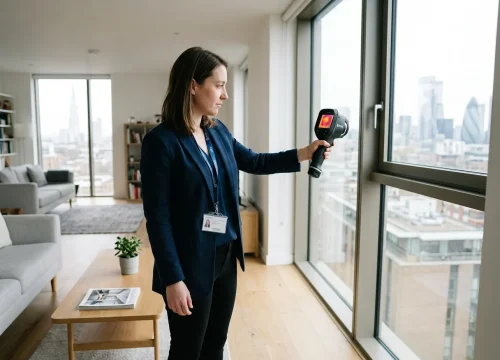
Photo: Assessor checking heat loss around a London apartment window
Accredited · GOV.UK-Lodged · Compliant
Accredited DEAs
12,000+ certificates since 2018 · Rated 4.8 on Trustpilot
What is an EPC and When Do You Legally Need one?
An EPC shows a property's energy efficiency rating from A to G, along with estimated energy costs and recommendations to improve efficiency.
An EPC certificate London is required when a property is built, sold or let. Advertising a property without a valid EPC can result in a £200 fixed penalty.
An Energy Performance Certificate London is valid for 10 years. Properties with an EPC D or E rating need an improvement plan for the 2030 EPC C requirement.
Is EPC C by 2030 Confirmed and What does it mean for Landlords?
The Warm Homes Plan dated 21 January 2026 confirms EPC C for privately rented homes in England from 1 October 2030. All tenancies follow one deadline, with a £10,000 improvement cap. An EPC certificate for landlords helps check current energy standards.
The current minimum is EPC E. F and G rated homes need a registered exemption. An EPC assessor London service helps landlords check their EPC rating before 2030.
The cap is up to £10,000 per property. Average estimated spend is around £5,400. The maximum penalty rises to £30,000 per breach. Landlords need to review EPC rating London results for improvement plans.
Homes under £100,000 have a lower cap based on 10% of value. A 10-year exemption applies if EPC C cannot be reached within the cap.
What is the Minimum EPC Rating for a Rental Property?
Private rented homes need at least EPC E to start or continue a tenancy. This rule applies to all tenancies since 1 April 2020. F and G rated properties need a valid exemption on the PRS Exemptions Register before letting.
| Requirement | Current rules | 2030 rules |
|---|---|---|
| Minimum EPC rating | EPC E | EPC C |
| Improvement cap | £3,500 | Up to £10,000 per property |
| Maximum penalty | £5,000 total per property | £30,000 per property per breach |
| Tenancy coverage | Private tenancies | Private tenancies with one deadline |
The current EPC E standard remains the legal minimum for rentals. The confirmed EPC C requirement from 1 October 2030 means landlords need to plan future property improvements.
How much does an EPC cost in London?
EPC certificate costs in London depend on property type, size, layout, and building use. A single residential flat requires less assessment work than a large business setup, so London market rates change with these factors.
One flat rate for a single residential flat or house, domestic EPC lodged on the GOV.UK register. Clear pricing that stays the same across all residential sizes.
Commercial premises and other property types are priced after a direct audit for a clear quote.
Portfolio and multi-site managers book a free portfolio compliance audit directly through the site.
We respond within 15 minutes (Mon to Sat). No spam. SSL Secured · ICO Registered.
Domestic vs Commercial EPCs: Which do you need?
A Residential EPC certificate covers houses, flats, and other homes. An accredited Domestic Energy Assessor (DEA) carries out the assessment. Our London energy assessors provide EPCs for homes built, sold, or let.
A commercial EPC covers offices, shops, warehouses, and other non-domestic buildings. A non-domestic energy assessor completes the assessment. Commercial MEES require a minimum EPC rating of E. From 2031, eligible privately rented buildings over 1,000 sqm require EPC B where cost-effective.
What to expect from your EPC inspection
How to Improve your EPC Rating Before 2030
Improving an EPC rating starts with identifying the right upgrades for each property. The most cost-effective improvements include insulation, heating controls, LED lighting, better glazing, and low-carbon heating where suitable.
Improvements receive part-funding through schemes such as the Boiler Upgrade Scheme (BUS) and GBIS. A London EPC certificate highlights suitable upgrades, and BUS funding does not count towards the £10,000 cap.
Plan for 2030
EPC Compliance for Portfolios and Property Professionals
Managing multiple properties means tracking EPC ratings, expiry dates, and 2030 requirements. SR Maintenance helps landlords with ongoing property compliance management with a clear portfolio plan.
EPC Assessments Across Every London Borough
We provide EPC assessments across all 33 London boroughs and the M25 area for for HMOs, care homes, and portfolio properties. Our compliance services help landlords and agents meet legal requirements.
EPC Barking and Dagenham
EPC Barnet
EPC Bexley
EPC Brent
EPC Bromley
EPC Camden
EPC City of London
EPC Croydon
EPC Ealing
EPC Enfield
EPC Greenwich
EPC Hackney
EPC Hammersmith and Fulham
EPC Haringey
EPC Harrow
EPC Havering
EPC Hillingdon
EPC Hounslow
EPC Islington
EPC Kensington and Chelsea
EPC Kingston upon Thames
EPC Lambeth
EPC Lewisham
EPC Merton
EPC Newham
EPC Redbridge
EPC Richmond upon Thames
EPC Southwark
EPC Sutton
EPC Tower Hamlets
EPC Waltham Forest
EPC Wandsworth
EPC Westminster
Other Services for Your Property Compliance
Gas, fire risk, and electrical checks help you meet important property requirements. Arrange the checks you need and keep your certificates and reports up to date.
Gas Safety Certificate
Checks gas appliances and systems for safety issues and provides the required certificate.
Electrical Installation Condition Report
A detailed check of fixed wiring and electrical installations to identify any issues.
Fire Risk Assessment
An assessment of your property to identify fire risks and recommend steps to improve fire safety.
EPC London: Frequently Asked Questions
Yes, EPC C by 2030 is confirmed under the Warm Homes Plan.
- Confirmed on 21 January 2026.
- The cost cap is £10,000.
- Maximum penalties reach £30,000.
Yes, SR Maintenance covers all 33 London boroughs and the M25 corridor.
- Domestic and commercial EPC assessments are available.
- Support covers residential and managed portfolios.